

Radiator Recycle Machine
Why Choose Us?
Henan Forchen Machinery Co., Ltd. is a professional manufacturer and supplier of scrap metal and plastic recycling machinery. Since its establishment in 2000, our factory covers an area of more than 20,000 square meters, and has set up sales and production centers in many places, including Henan, Zhejiang and other regions. We mainly supply the following products: copper wire granulators, wire stripping machines, motor recycling machines, radiator recycling machines, PCB recycling machines, automobile recycling machines, metal crushers and related supporting equipment.
Rich Experience
Since its establishment, our team has gained extensive experience in the equipment recycling field, providing products and services to more than 50 countries around the world. And our overseas annual sales exceed US$10 million and are growing year by year.
Well Equipped
Our factory is equipped with internationally advanced CNC laser cutting machines, CNC lathes, shearing and bending machines, drilling machines, boring machines and other processing equipment to support all types of precision manufacturing.
Warm service
We also provide complete recycling line design and planning, equipment installation, staff training and regular visits to domestic and foreign customers.
Quality Assurance
All products and management systems currently operated by our company have obtained CE, SGS and ISO 9001 certifications.
-
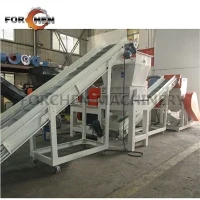
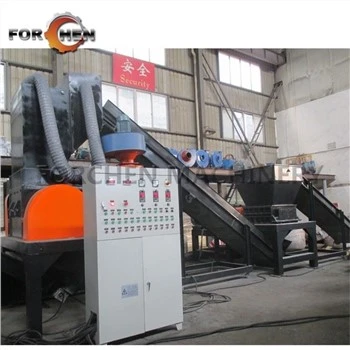 Waste Radiator Crusher And Separator1.Radiator crusher and separator production capacity:1200-1500kg/h . 2.Applicable radiator for the radiator crusher and separator: scrap car ridiator,air conditioner radiator.. 3.OutputAdd to Inquiry
 -
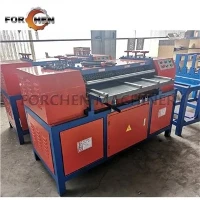
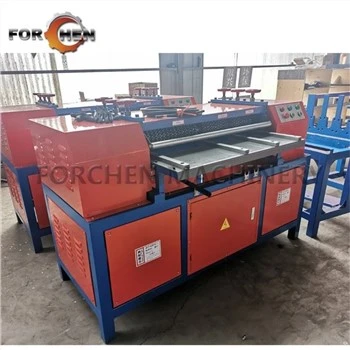 Radiator Stripping Machine1. The radiator stripping machine is used for removing aluminum sheet on the copper air conditioner radiator.. 2. The radiator stripping machine can process around 10 tons scrap radiator per month..Add to Inquiry
 -
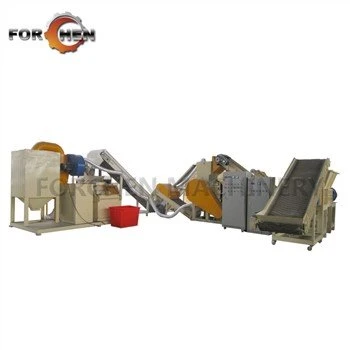 Copper Radiator Granulator and Separator Machine1. Radiator Granulator and separator machine working procedure: crushing, shredding, separating. . 2. Processing capacity: 1200-1500kg/h . 3. Radiator granulator and separator machine recycling rate:Add to Inquiry
 -
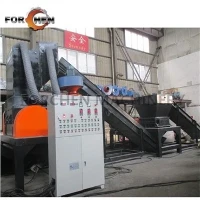
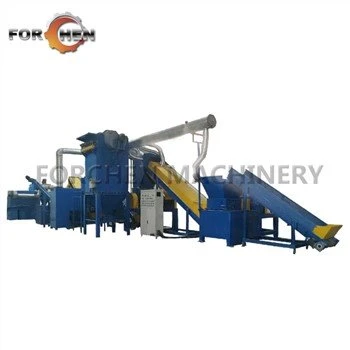 Scrap Car Radiator Recycle Plant1. Compressed radiator and radiator bale could be processed by the scrap radiaor recycle plant. . 2. Output metal:pure copper, pure aluminum, pure ferrous. . 3. The scrap radiator recycle plant couldAdd to Inquiry
 -
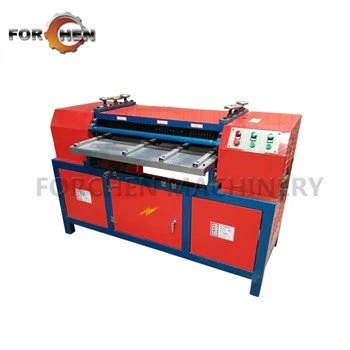 Industrial Copper Aluminum Radiator Separator MachineThis radiator separator machine is used for separating copper pipes and aluminum of waste radiator. . 1.Process capability: 3000-4000kg/day . 2.Single layer and double layer radiator could beAdd to Inquiry
 -
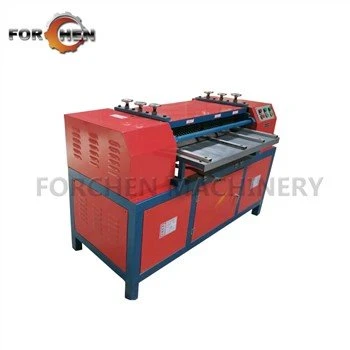 Air Conditioner Radiator Recycling Machine1. Radiator recycling machine power: 7KW . 2. The radiator recycling machine can deal with different size air conditioner radiator. . 3. Accessory machine supplied: band sawAdd to Inquiry
- Mob: +8615313051092
- sales@forchenmachine.com
- Add: No.2106, Henan Chamber of Commerce Building, Fulu Street, Zhongxing Rd, Henan, China
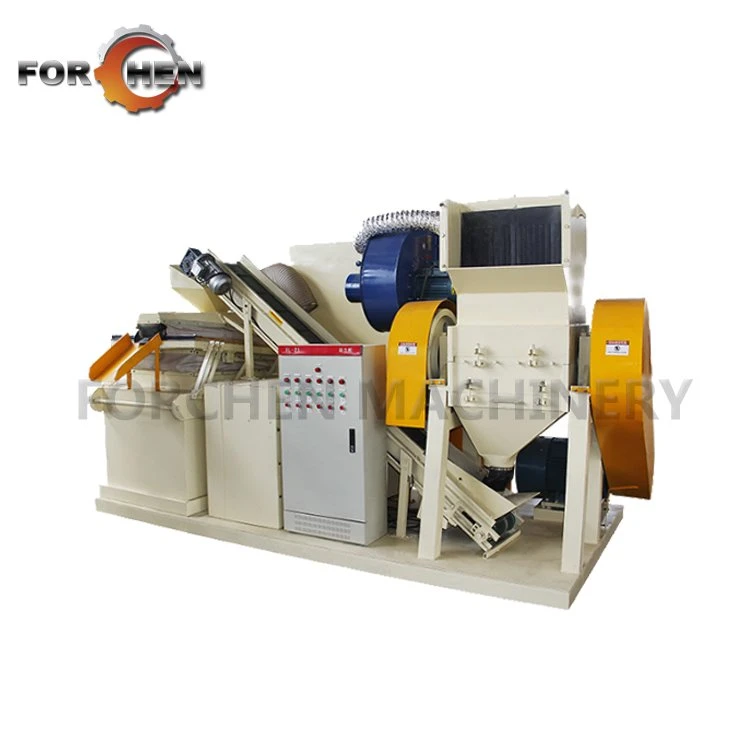
The Radiator Recycle Machinecan quickly separate the copper tube and aluminum foil from the old air conditioner radiator without damaging the copper tube, and make the aluminum foil into a block instead of a powder. In addition, our products have a very wide range of applications, such as waste air conditioners, old radiators, end-of-life water tanks, internal copper and aluminum of auto parts, disassembly and separation. And the most attractive point for customers is that our products can be customized to meet all your requirements.
The Radiator Recycle Machine are made of carbon steel casting, strong and durable, and we choose to separate the cutting blade, in the use of the process of separation speed, do not damage the copper pipe as well as workers; secondly, can be used in one machine, no band saw, the size of the radiator are completed by one machine. Fast speed, low cost, high efficacy characteristics; the most attractive point is that our machine is easy to operate, high efficiency and labor saving, has a very broad market prospects.
What is Radiator Recycle Machine?
Radiator recycling machine is a popular machine to recycle radiator scrap all over the world. It is mainly to process the waste radiators from air conditioner or car water tank, which can recycle the copper and aluminum out from the scrap radiators in a high efficient way. The machine uses a physical separation method. The crusher's blades rotate at high speeds to crush the radiators and create uniform materials for separation.
Features of Radiator Recycle Machine
Efficient Separation
Our radiator recycling equipment uses a separation technology that combines machinery and airflow to quickly separate copper and aluminum from radiator waste.
Easy to Use
These recycling plants are equipped with semi-automatic to fully automated capabilities and can be specified according to customer needs to reduce the need for manual intervention.
Good Compatibility
Equipped with powerful crushers and high-speed magnetic separators, our radiator recycling equipment can handle a variety of radiator sizes and types.
Stable Operation
They are designed to operate at low energy consumption rates, shredding the radiator leaving clean, recyclable material and keeping the machine itself smooth during operation.
Types of Radiator Recycle Machine
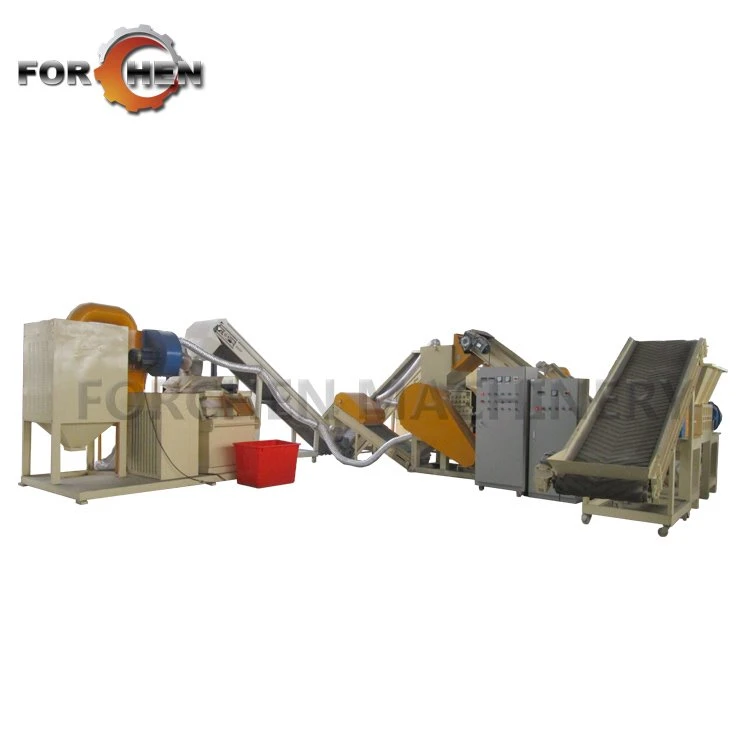
Large-Scale Radiator Recycling Machine
A large-scale radiator recycling machine can process a variety of waste radiators, such as those from air conditioners, car water tanks, and industrial cold storage. The large-scale radiator recycling machine working principle is crushing and separation. The first step is shredding. The shredder will cut the radiator into small pieces. The second step is crushing. The crusher will crush the radiator pieces into smaller, or can crush this radiator which are not shredded by shredder. Thirdly, the light weight of aluminum and iron will be separated by negative pressure baffling separator and magnetic separator. The last step is air separation. Air separator will separate aluminum and copper according to their different gravities.
Stripping Type Radiator Recycling Machine
A stripping type radiator recycling machine is a single unit that separates aluminum from copper tubes in waste radiators. It's also known as a small-scale radiator recycling machine. The working principle of stripping type radiator recycling machine is cutting and separation. Because the stripping type radiator recycling machine only can process both single and double layer radiators which are complete and flat. And it can only process radiator with the sizes of 19mm, 21mm and 25mm, so it needs to be used with a radiator cutting machine. The stripping type radiator recycling machine can directly strip the aluminum foil off the copper tubes, and thus can keep the shape of the foil.
What are the Structure of a Radiator?
Radiators are one of the most essential parts of vehicles and gen sets. Because vehicles and gen sets produce heat, the role of a radiator is to regulate internal combustion engine temperature and prevent overheating. Radiators are designed to transfer heat through a coolant fan. In this article, we will look into the 4 important parts of a radiator as well as the wear and tear they may suffer from.
Radiator Core Tubes
Radio core tubes provide a way to shed away the heat of your coolant. To fulfill more of its purpose, it has tubes and fins wherein the tubes move inside the core, while the fins run on the outer part of your coolant. For detailed information about coolant tubes, they may be either made up of a brass-copper construction or aluminum, depending on your radiator design.
When your radiator plumbing fails, it is because of wear and clogs caused by particulates in your coolant, and also from external punctures and internal corrosion. You don’t have to consider selling them immediately at a junk shop because you can still repair the leaks in the radiator tubes.
Inlet and Outlet Pipes
The coolant inlet and outlet pipes are commonly manufactured components from plastics for newly-made vehicles or modern composite plastics. The latter is more durable and is resistant to heat. If you have plastic coolant inlet and outlet pipes, they can become brittle and will crack over time, which leads to leaks. In case the damage isn’t too severe, you can fix it through heat fusion welding to restore the parts. If not, you have to disassemble your radiator and buy another set of pipes.
Cooling Fins
Known to provide extra surface area for your coolant to bring out its heat with its metal pieces, cooling fins are a flexible part of a radiator. You don’t have to worry about damaging your fins in the future and how it will reduce the cooling coherence of your radiator because it rarely happens.But if numerous fins are damaged, you need to consider repairing it first before purchasing at radiator shops.
As mentioned earlier, newer vehicles have many plastic components, and plastic header tanks are included. What manufacturers do is attach these permanently to the metal core.
Plastic Header Tanks
Do you have a new vehicle? Then it means its radiator has integrated plastic components such as the tank. Manufacturers attach these permanently to the metal core, making them hard for people to replace on their own. Sad to say, plastic can frequently break due to heating and cooling circles, leading to leaking of coolant. But for other options, you may also pull out the plastic components and just replace them with custom metal alternatives to prevent heat fusions.
Corrosion and Mineral Build-Up
One of the most common causes of radiator failure is corrosion and mineral build-up due to a lack of maintenance. This buildup can cause blockages in the cooling system and eventually lead to a radiator malfunction. To prevent this from happening, drivers should flush their radiator and coolant at least once a year. This will help remove any build-up that may have accumulated.
Leaking Radiators
The common cause of a leaking radiator is a broken or cracked seal. Over time, the seal can become brittle and weak, which allows coolant to escape. To prevent this from happening, drivers should inspect the seal of their radiator regularly and replace it if needed.
Faulty Temperature Sensors
Faulty temperature sensors can also cause radiator failure. The purpose of the temperature sensor is to regulate the temperature of the radiator and coolant. If the sensor is malfunctioning, it can cause the radiator to overheat and potentially cause a failure. To prevent this from happening, drivers should have their temperature sensors inspected regularly and replace them when needed.
Faulty Fan Clutches
The fan clutch is responsible for controlling the speed of the radiator’s fan. If the fan clutch is not functioning properly, it can cause the fan to run too fast or too slow, which can lead to overheating. To prevent this from happening, drivers should have their fan clutches inspected regularly and repaired or replaced if needed.
Inefficient Coolant
Inefficient coolant can also cause radiator failure. The coolant is responsible for keeping the radiator from overheating, but over time it can become less effective. To prevent this from happening, drivers should flush their radiator and coolant regularly to ensure it is functioning properly.
Product usage process
Shredding
The waste radiators should be removed from the car or air conditioner and separated from other materials such as plastic and steel. The Radiator Recycle Machine has two conveyor belts, one for the inlet and the other for the outlet. Place the waste radiator on the inlet conveyor belt. Shredding of the raw material into small pieces with a shredder.
01
Crushing
The crusher uses a long-hole screen, which is less prone to the formation of copper-clad aluminium. The machine's shredder will break down and crush the waste radiator into small pieces. Then the hammer mill will grind them into small particles.
02
Negative-pressure Baffling Separation
Sorting out light aluminium with a negative-pressure baffling separator. The negative pressure baffle allows a large amount of light aluminium to be sucked out first, thus increasing the separation rate. The vibrating screen will sieve the small particles into different sizes.
03
Magnetic Separation
It uses a magnetic separator with a tipping bucket, the copper and aluminum iron will be separated from the waste radiators. The copper pipes and aluminum fins will be separated and collected separately. The aluminum iron will be collected separately.
04
Air Separation
Copper and aluminum are sorted out using air separator according to the different specific gravity of the metals.
05
In the past, people usually throw away the waste radiators directly. But now, more and more people start to recycle them by radiator recycling machine. What cause this change? It is all because that people has known that they can get benefits from scrap radiator recycling. So what are the benefits? I will make a explain in this article.
Resource Benefit
As we know, copper is one important metal resource. The demand of copper in the world is huge. The copper is in short supply in the world now. But a radiator is usually made of copper, aluminum and iron. If we can get copper out of radiator by radiator recycling machine, the current situation of copper can be slightly improved. So recycling scrap radiator is an important way to increase the amount of copper.
Economic Benefit
The second benefit is that scrap radiator recycling can bring economic benefit to us. The radiator is usually made of copper, aluminum and a little iron metals. We can sell the copper and aluminum directly after separating them. Because their price is high. The price of aluminum is about 2415 USD now. Not to mention the price of copper. Its price is higher than aluminum, which can reach to about 9918 USD. So if we can recycle scrap radiators by radiator recycling machine, we will get copper and aluminum with the high purity of 99%, so the profit we get is pretty high.
Environmental Benefit
As we all know, e waste, includes scrap radiators, will have bad effect on the environment. But radiator recycling machine can recycle scrap radiators 100%, which will not cause resource waste. What's more, it adopts dry type physical separation. The whole process is shredding, crushing, negative pressure baffling and air separation, which will generate no fire, no water and no chemicals.
Handling Ratings of Radiators and Other Scrap Items
Some of the most difficult things to take apart while scrapping can be worth your time and money if you do it the right way. But knowing how to take them apart and what goes into it, can be the most dificult challenge. The iScrap App Team has ranked some of the most common scrap items to take apart based on their difficulty. Ratings are based on a 5-star system, with 5 being the most difficult.
Computer Tower
They are very common to find in residential areas or even in your own basement. Desktop computer towers are relatively easy to take apart for scrap components inside. All you really need is a screwdriver to take the outer casing off and then start unscrewing the components from inside. You can take the wires and ribbon wires off of their corresponding board easily by unclipping them with your kids. Also you can remove the AL heatsinks, RAM boards, and CPU chips by pulling them off the mother board. You will need to use your screwdriver to remove the motherboard, Low Grade Boards, harddrives, and disc drives. Check out our helpful step by step guide for scrapping a computer tower.
Air Conditioner
This is one of the more difficult items to take apart not because it is physically demanding but rather the legality behind scrapping one can become a bit tedious and difficult. Inside air conditioners there is a chemical called freon that helps the system blow cooler air into the room, this chemical is very harmful to the environment. Because of that, you are not legally allowed to dissipate this chemical into the air and can actually be fined by the EPA for a lot of money if you do. Instead you must contact a licensed HVAC contractor to remove the gas safely and then you can proceed by removing the copper, fin, sealed unit, and wires.
Electric Motor
If you are interested in scrapping a motor, things can get a bit complicated if you have never done it before. Because electric motors can be found in a variety of items and appliances, you may want to learn the best way to take them apart for the copper wire inside. You will come across them quite often so if you can establish a quick and efficient want of taking them apart, you can be making much more at the scrap yard. A few things to keep in mind are, while that the copper wire wrapped around the inside may look like bare bright copper it usually is not and there is also quite a large quantity of steel that is within the motor. To check the wire that is on the inside, take a file to the outside of it and you should see the color of the copper on the inside. Usually the wire will have a shellac on the outside that will consider the wire a #2 copper price at your scrap yard.
Aluminum Copper Radiators
When you are scrapping appliances with refrigerants, like refrigerators, air conditioners, and freezers will have aluminum/copper radiators on the inside of the appliance. When you are taking the appliances apart for the copper tubing, wires, and electric motors, be sure to remove the AL/Copper fins. Just like we mentioned about the air conditioner and the freon, be sure to have the freon removed. Once it is removed, it is relatively easy to remove the steel ends for a bigger profit at the scrap yard. If you have a sawzall it can be simple to run the blade down along the edge of the radiator to remove the steel endings and get the clean aluminum and copper radiator. Be sure to separate the steel ends, as some yards will pay you a special price for them.
Maintenance of Radiator Recycle Machine?
Safety Operation
Before an operator gets near the equipment to perform maintenance duties, he or she must understand the importance of lockout/tagout, the safety procedure that ensures that the power source is cut off and cannot be restarted before the service or maintenance work is complete. Lockout/tagout procedures are critical to preventing injuries and fatalities on the job site.
Develop a Maintenance Program
A maintenance program that details lubrication intervals, oil changes and filter changes is vital to keeping equipment running smoothly. Every piece of equipment has different needs, which is why it is important to follow the manual recommendations, but it’s equally as important to consider environment and application factors.
You need to be conscious of the levels of dust and dirt. Use any citrus-based cleaner to remove oils from the radiator. The best method is to let the radiator and equipment cool down, and then apply the citrus cleaner and rinse with cool water.
Observe Your Equipment Daily
As you are operating your equipment, it’s important to pay attention to the details—not only the way it looks, such as belt tracking, belt tension, oil temperatures, loose bolts and material buildup—but also the way it sounds.
If you can catch something before it comes apart, then you can save yourself a lot of downtime. Sounds can be a great tool to use in predicting maintenance failures, such as squeaky bearings, metal rubbing on metal and high pitched noises that are out of the ordinary.
As you notice crusher wear parts start to wear, it’s important to adjust the crusher’s settings to match your production requirements, particularly in recycle applications.
Use Low-Chrome or Medium-Chrome Wear Parts
Choosing the right metallurgy will reduce the number of times one has to replace wear parts. Certain natural aggregates within the recycle may be highly abrasive and require a specific metallurgy to prolong the life of the blow bar.
In certain applications where a high amount of steel is introduced into the crusher by means of rebar or mesh, operators should know that higher chrome content is not as tolerant to the introduction of metal into the crusher as low-chrome or medium-chrome options.
Educate Staff on the Product
While application is often not considered a maintenance issue, the two go hand-in-hand when caring for your equipment. For example, two of the most critical aspects of an operation when making spec product in terms of productivity and wear of the machine are screen size and apron settings. Operators can optimize productivity in their crushing plants by using the machine’s top deck as a buffer deck whenever possible, thereby reducing carryover. Likewise, by maintaining proper apron settings, material can get through the machine in one pass, which also helps improve productivity and reduce wear.
Frequently Asked Questions of Radiator Recycle Machine
Q: Why are radiators no longer used?
Q: What are radiators made of?
Q: What not to do with radiator?
Q: What are the environmental benefits of recycling radiators?
Q: How are radiators recycled?
Q: What are the risks of not recycling my radiator?
Q: Can i make money from recycling my radiator?
Q: How does a radiator recycle machine work?
Q: What kind of radiators can be processed by a radiator recycle machine?
Q: What materials can be recovered from a radiator using a recycle machine?
Q: How efficient is a radiator recycle machine?
Q: How much does a radiator recycle machine cost?
Q: How are radiators recycled?
Q: Can old radiators be recycled?
Q: What are some hazards associated with the recycling process?
(1)Chemical exposure.
(2)Combustible dust explosions.
(3)Machine guarding hazards.
(4)Exposure to powerful equipment with moving parts.
Q: How long does it take to process a radiator using a radiator recycle machine?
Q: What are the economic benefits of using a radiator recycle machine?
Q: What are the 4 types of recycle machine maintenance?
(2)Predictive maintenance.
(3)Preventive maintenance.
(4)Condition-based maintenance.
Q: What safety features are included in a radiator recycle machine?
(1)Automatic shutdown.
(2)Automatic overload alarm.
(3)Automatic cover closing devices.
(4)Safe distance from working machinery.
(5)Use a dry physical separation method that doesn't require water, fire, or chemicals.
Q: What kind of warranty is included with a radiator recycle machine?
(1)Video technical support.
(2)Online support.
(3)Spare parts.
As one of the most professional radiator recycle machine manufacturers and suppliers in China for over 20 years, we're featured by good service and competitive price. Please rest assured to wholesale high quality radiator recycle machine for sale here from our factory.
